Halloween coloring pages by difficulty are easiest to choose when you look beyond age labels. A page with a single pumpkin and broad sections asks for a different kind of attention than a witch’s cottage filled with shingles, windows, branches, and tiny objects. Neither is automatically better. The right choice depends on whether you want a quick finish, a steady half-hour project, or a scene you can return to over several sittings.
Coloring-page difficulty is not a formal standard, and different collections may use labels differently. In practical terms, it usually describes how many enclosed spaces a picture has, how small those spaces are, and how much background linework competes for attention. This guide gives you a simple way to judge those features before you begin.
Easy Halloween coloring pages: open shapes and quick decisions
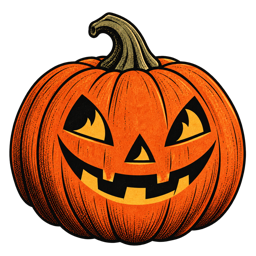
An easy page usually has one main subject, bold outlines, and fewer small sections. It might show a large jack-o’-lantern, a friendly ghost, a witch hat, or a small group of stars. Background details are limited, so it is easier to see where to begin and to finish a satisfying portion in one sitting.
Choose an easy design when you have only a few minutes, want a low-pressure warm-up, or prefer broad areas over fine detail. Easy does not mean childish: a simple vintage pumpkin or silhouette can still look elegant when colored with a restrained palette. If you want more subject ideas for first-time colorists, see our guide to easy Halloween coloring pages for beginners.
Look for: large enclosed spaces, a clear focal point, fewer overlapping objects, and enough open paper to let the illustration breathe.
Medium Halloween pages: a little scene, a little structure
Medium pages often combine a main character with a few surrounding objects: a cat by a pumpkin, a witch near a doorway, or a ghost under a moon. There may be a small background, some repeated leaves or stars, and a mix of broad and narrow areas. These pages offer variety without demanding that every section be colored in a particular order.
A medium design is a useful choice when you want to practice changing colors across a composition. You can decide which objects should stand out, repeat one accent color in several places, and leave the smallest details for last. If you use markers, medium-size shapes provide room for clean coverage; pencils let you blend large areas into softer shadows.
Look for: two to four main elements, moderate background detail, and a mix of comfortable large areas and a few smaller accents.
Detailed Halloween coloring pages: layers, patterns, and patience
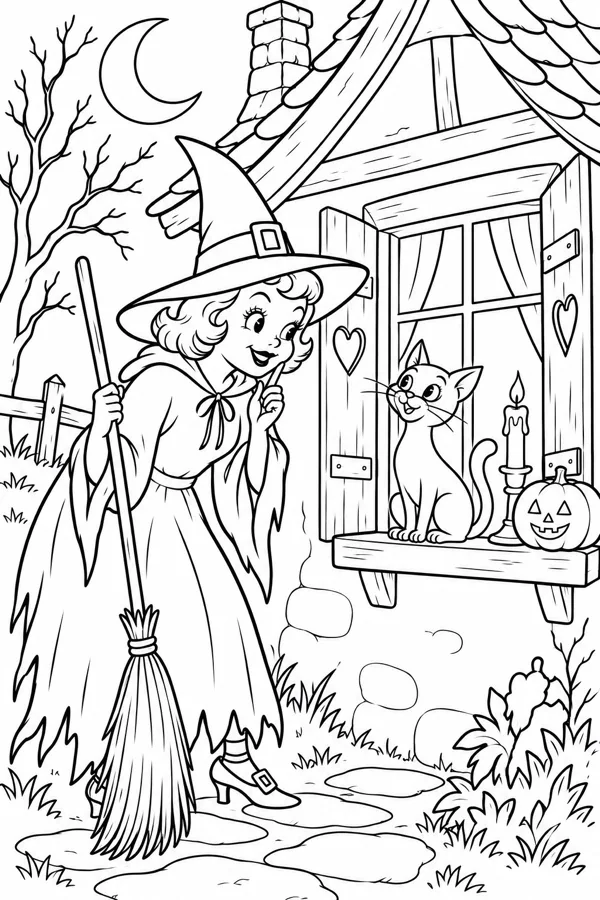
Detailed pages contain more visual layers and smaller spaces: roof tiles, patterned clothing, branches, windowpanes, leaves, lettering, or a mandala border. They can reward close attention, but they also ask you to make more decisions. A detailed illustration may take longer than one evening, and that is perfectly fine; completing one section can be a natural stopping point.
Choose a detailed page when you want to slow down, enjoy repeated marks, or explore shading and color relationships. It may suit fine-tip markers or sharpened pencils, but the right tool depends on the size of the spaces and your own comfort. A complex scene is not a test of artistic skill. You can leave some sections white, simplify a pattern, or use one color repeatedly.
For circular repetition and close-set shapes, try Halloween mandala coloring pages for adults. For a detailed story scene, explore haunted house Halloween coloring pages.
Look for: multiple layers, small enclosed shapes, repeated patterns, fine background lines, and enough visual structure to make pausing and returning easy.
Use a quick visual test before choosing
When a page has no difficulty label, zoom out or hold it at arm’s length. Count the broad sections first, then notice how many tiny areas remain. Ask three questions:
- How many focal objects do I see? One usually feels simpler; several overlapping subjects add decisions.
- How small are the tightest spaces? If most details are easy to fill with your chosen tool, the page may feel manageable. If many are smaller than your pencil tip or marker nib, expect slower work.
- How busy is the background? An open background gives the eye room to rest; branches, bricks, shingles, and patterns add another layer of detail.
Do not judge difficulty only by the number of objects. A page with many repeated shapes can feel calming, while a page with only a few irregular details may require more careful choices. What matters is the kind of attention the artwork asks from you.
Match the page to the time and energy you have
For a ten-minute pause, choose a bold, easy page or color one part of a larger illustration. For a longer evening, a medium scene can offer enough variety without becoming a project. If you want a multi-session activity, choose a detailed cottage, haunted house, or mandala and decide where you will stop before you begin.
Your energy matters as much as the clock. After a busy day, even an adult may prefer a pumpkin with broad sections. On a quiet weekend, a detailed page may be exactly right. There is no need to “graduate” to harder designs; moving between levels is part of finding a creative rhythm that works.
Let the tools help you choose
Colored pencils are flexible across all difficulty levels. Broad shapes can take a soft base layer, while smaller areas benefit from a sharpened point and light pressure. Markers work well when the spaces are large enough for their nibs and the paper can handle them; test a small area or scrap sheet first.
If tiny details feel frustrating, switch to a larger section, leave a gap, or choose a different tool. Our guides to colored-pencil techniques and markers for Halloween coloring pages can help you plan around the supplies you already have.
Digital coloring changes the feel of detail
On a phone, zooming can make small regions easier to reach, and undo can reduce the pressure of committing to a color. A detailed digital page may therefore feel different from a similarly detailed printed page. Still, zoom does not remove the number of choices in the composition; it simply gives you another way to work through them.
Vintage Halloween Coloring is an iOS app for digital coloring. If you want to compare the formats before choosing, read our guide to online versus printable Halloween coloring pages or visit the Halloween coloring pages collection.
A simple difficulty guide
- Easy: one main subject, broad shapes, open background — useful for a short break or a gentle start.
- Medium: a few connected objects and some background — useful when you want a scene with variety.
- Detailed: multiple layers, patterns, or small spaces — useful for slow coloring or a project you can revisit.
Think of these labels as a preview, not a rule. You can make any page simpler by using fewer colors and leaving details blank, or make an easy page more involved by adding texture and shadows.
Frequently asked questions
How do I choose the difficulty of a Halloween coloring page?
Look at the number and size of enclosed areas, the amount of background detail, and how much uninterrupted time you want. Large open shapes suit a short session; layered scenes and small patterns suit a longer one.
Are detailed Halloween coloring pages only for adults?
No. Difficulty describes visual detail, not age. Adults may prefer an easy page for a short break, while a younger colorist who enjoys detail may choose a more complex design with suitable tools and support.
Which tools work best for detailed Halloween coloring pages?
Sharpened colored pencils and fine-tip markers offer control in small spaces. Test markers first and choose a page with larger areas if your tools or preferred style do not suit very fine detail.
What is a good Halloween coloring page for a quick session?
Choose one main subject, bold outlines, a simple background, and fewer enclosed spaces, such as a pumpkin, ghost, or witch hat. You can also finish one portion of a larger page instead of the full illustration.