
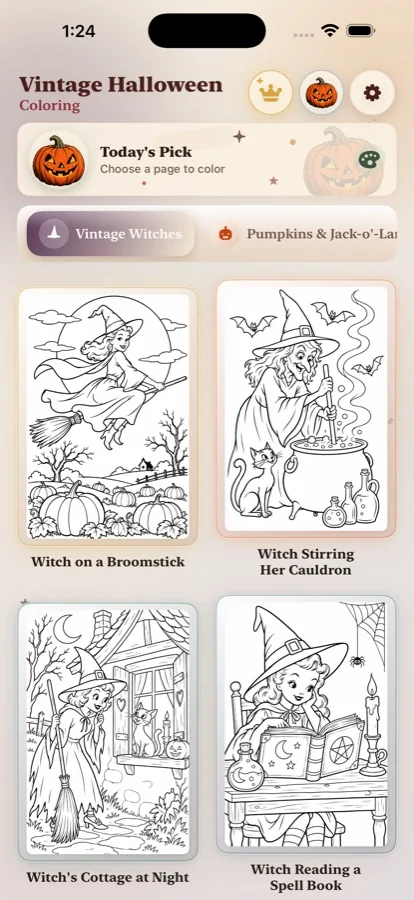
Sensory-friendly Halloween coloring pages offer a gentler way to enjoy the season. Instead of treating Halloween as a single loud, spooky experience, they make room for different preferences: a simple pumpkin instead of a crowded haunted house, a quiet palette instead of intense contrast, and a short activity instead of a long task. The page is not meant to diagnose, treat, or “fix” anything. It is simply a thoughtfully designed option that lets the colorist choose what feels comfortable.
This approach can help families, teachers, librarians, and caregivers prepare an inclusive October table. Some people enjoy detailed art; others prefer bold outlines and one large shape. Some want to color with a marker; others dislike the smell, friction, or sound of certain tools. A sensory-friendly setup begins by offering choices rather than assuming that one Halloween activity will suit everyone.
What makes a Halloween coloring page sensory-friendly?
There is no universal sensory-friendly design. Every person has different visual, tactile, auditory, and emotional preferences. Still, several page features often make a coloring activity easier to approach. The artwork is clear, the visual hierarchy is calm, and the person can understand what to do without a long explanation.
- One clear focal point: a pumpkin, cat, moon, or friendly ghost is easy to find.
- Open spaces: larger regions allow relaxed coloring without constant precision.
- Predictable borders: a simple frame gives the page a visual edge without crowding it.
- Consistent lines: steady outlines are easier to scan than chaotic, competing marks.
- Optional detail: small stars or leaves can be colored when wanted, not required.
- Friendly subject matter: the page does not depend on frightening faces, blood, or surprise imagery.
A sensory-friendly page can still be beautiful. Calm does not mean empty or childish. A vintage pumpkin patch, a moonlit cottage, or a black cat on a fence can have atmosphere while preserving a comfortable amount of visual breathing room.
Choose low-stimulation Halloween subjects
When preparing a printable set, begin with subjects that are familiar and easy to interpret. Give the colorist a preview or let them choose the page themselves. Control over the subject is often more useful than a label that claims a page will work for everyone.
Pumpkins and autumn leaves
Pumpkins have a clear silhouette and natural sections. A single jack-o-lantern can offer enough repetition without becoming a maze of tiny spaces. Leaves, acorns, and a simple fence add seasonal context while keeping the main shape recognizable.
Friendly ghosts and moons
A rounded ghost with a simple expression can be less intense than a detailed monster. Pair it with a moon, a few large stars, or a soft cloud. Keep the background open so the character does not compete with a busy pattern.
Black cats and cozy houses
A cat sitting by a window or a small house with warm light can create a quiet narrative. The colorist can focus on the cat, the sky, or the windows without needing to complete every object. For more subject ideas, see our Halloween cat coloring pages guide.
Simple witches and broomsticks
A witch does not need a frightening face or a crowded potion room. A large hat, a broom, and a moon are enough for a recognizable Halloween image. Offer the option to color just the hat or cloak if a full page feels too demanding.
Reduce visual overload without removing creativity
Busy coloring pages often ask the eye to process many small objects at once. A sensory-friendly page can preserve creative choice by separating the details into optional layers. For example, a large pumpkin sits in the foreground, while a few leaves and stars form a secondary area. The colorist can stop after the pumpkin and still have a complete picture.
Use contrast intentionally. Strong black outlines help the subject stand out, but too many dark fills can make the page feel heavy. A white background, a limited border, and a restrained number of decorative marks usually create more visual rest.
Digital coloring needs the same care. Avoid automatic flashes, loud sounds, rapid transitions, and unexpected pop-ups. Keep tool choices visible and predictable. Our article on online versus printable Halloween coloring pages compares the control and convenience of both formats.
Offer a predictable coloring routine
Predictability can make a new seasonal activity easier to approach. A simple routine may be more valuable than a large collection of pages. Tell the colorist what will happen, show the available tools, and make stopping acceptable from the beginning.
- Preview: show the page and name the main subjects.
- Choose: let the person select the page, paper, and tools when possible.
- Start small: color one shape or one corner first.
- Pause: allow breaks without calling them failure.
- Finish freely: a page is complete when the colorist says it is complete.
A visual timer may help some people and distract others. A choice board may help one learner and feel like extra work to another. Use familiar supports rather than introducing a new system just because it is Halloween. The best setup is the one that reduces uncertainty for this person.
Select comfortable coloring tools
Tools are part of the sensory experience. The right choice depends on grip, pressure, smell, sound, and personal preference. Put out a small selection instead of a full box of every possible material. Too many options can make the activity harder to begin.
- Colored pencils: quiet, precise, and easy to layer, though some people dislike the pressure needed.
- Crayons: familiar and expressive, especially when offered in a larger or ergonomic shape.
- Washable markers: bright and fast, but check smell, bleed-through, and the sound of the tip.
- Gel pens: useful for small accents when sparkle, texture, or scent is comfortable.
- Digital tools: helpful for undo and color control when screen brightness and effects remain adjustable.
Do not insist on a “proper” tool. A finished page made with one favorite pencil is more successful than a page abandoned because the materials felt wrong. For paper and printer choices, our Halloween printable PDF guide explains how to prepare a clean, usable page.
Make a sensory-friendly classroom station
A classroom coloring station works best when it is optional, clearly labeled, and separate from loud group activity. Place a small stack of pages, a few quiet tools, and a visible “finished” folder nearby. Students can use it during arrival, a transition, independent work, or a calm break.
Choose language that avoids pressure. “You may color here” is more welcoming than “You need to calm down.” Let a student sit without coloring, choose a blank sheet, or leave when ready. If a finished page is displayed, ask first. Public praise can feel uncomfortable for some learners even when it is well intentioned.
Keep the selection varied: one page with a pumpkin, one with a cat, one with a moon, and one with a slightly more detailed scene. Our Halloween classroom coloring pages guide includes ideas for early finishers, centers, and seasonal routines.
For a group display, use a shared poster only when students can choose how much to contribute. Our collaborative Halloween coloring poster guide explains how to divide a large project into manageable sections.
Support children who find Halloween overwhelming
Halloween includes costumes, decorations, crowds, unfamiliar sounds, and strong visual themes. Coloring can be one quiet way to introduce the season, but it should not be treated as a replacement for individualized support. Ask the child or caregiver what is comfortable, and respect a no.
Avoid assuming that every autistic child, anxious child, or sensory-seeking child wants the same kind of page. Some people prefer bold contrast; others find it tiring. Some enjoy spooky monsters; others want only pumpkins. Specific observation and listening are more useful than a generic promise that a resource is “perfect for everyone.”
For broader Halloween planning and sensory-aware preparation, consult resources such as the Hopebridge autism-friendly Halloween guide. This coloring article is an activity-design resource, not medical, therapeutic, or behavioral advice.
Use color to create a calmer mood
Color choices can be part of the invitation. A small palette reduces decision fatigue and creates a cohesive result. Try warm cream, muted orange, dusty purple, soft green, and deep brown for a vintage autumn feeling. For a moonlit page, use pale yellow, lavender, midnight blue, and charcoal.
Do not prescribe the palette. Show it as one possible starting point, then allow the colorist to choose. A bright red pumpkin or a turquoise ghost may be exactly what makes the page feel personal and enjoyable. Our guide to Halloween coloring book color palettes offers more combinations for pumpkin, midnight, and vintage tones.
Adapt the page for different needs
Small changes can make a printable more flexible. Enlarge the page if the original details are too small. Crop to one subject if the full scene is overwhelming. Cover unused sections with a blank sheet. Use a transparent ruler or a piece of paper to reveal one area at a time.
- Print a single subject on a full sheet for maximum open space.
- Offer landscape and portrait orientation when possible.
- Use thicker paper if the colorist presses hard or likes markers.
- Remove glossy reflections if glare is distracting.
- Keep an uncolored duplicate for a second, different palette.
These are options, not rules. If a person prefers the full busy scene, that preference is valid. Sensory-friendly design means increasing control and choice, not narrowing what someone is allowed to enjoy.
Make the activity social without making it demanding
Some people like parallel play: several colorists sit together while each works on a different page. There is no need to talk or compare results. Others enjoy choosing a shared palette or coloring one part of a group poster. Offer both individual and collaborative options.
A family can place pages on a table before a movie, during a quiet afternoon, or after returning from a busy event. A library can provide a small coloring basket in a less crowded corner. A teacher can keep a predictable page available during a party. These moments help make Halloween more accessible without asking anyone to perform enjoyment.
Our Halloween calm corner guide covers optional calm spaces, while our mindfulness coloring article explores a slower approach for adults.
How to know whether a page is working
Look for signs of comfort rather than completion. The person may settle into a repeated motion, choose a color independently, return to the page later, or simply remain nearby. They may also reject the page, cover it, push the tools away, or need a break. Both responses are useful information.
Change one thing at a time: reduce the number of tools, move to a quieter surface, offer a simpler subject, or remove a scented material. Do not treat the finished page as the only measure of success. The goal is a respectful creative option that the person can control.
Sensory-friendly Halloween coloring pages make room for many ways to meet the season. A simple outline, a familiar subject, a comfortable tool, and permission to stop can turn a potentially overwhelming activity into a calm invitation. Start with choice, watch the individual response, and let the page be as quiet, colorful, short, or unfinished as it needs to be.
Frequently asked questions
What are sensory-friendly Halloween coloring pages?
They are designed with a calmer visual and physical experience in mind: clear outlines, predictable layouts, familiar subjects, open spaces, and optional detail.
What should a low-stimulation page look like?
Look for one main subject, generous white space, simple borders, bold but uncluttered lines, and friendly or neutral imagery.
Which tools are best?
Choose based on individual preference. Soft colored pencils, comfortable crayons, and quiet felt-tip markers may work well. Offer a small choice and avoid scented or noisy supplies when needed.
Can they be used in classrooms?
Yes, as an optional quiet activity, transition choice, calm-corner resource, or independent art station.