
Halloween is often presented as a loud holiday: bright decorations, crowded shops, dramatic costumes, and a calendar that seems to speed up as October 31 approaches. But there is another side of the season. It is the warm lamp beside a window, the smell of leaves after rain, the first cold evening, and a few quiet minutes with a page and a handful of colors.
Halloween mindfulness coloring pages are a way to make room for that quieter side. The page does not need to be perfect, and the session does not need to be long. You simply choose one visual detail, notice the color moving across the paper, and return to the activity whenever your attention wanders.
This is a creative practice, not a medical treatment. Coloring may feel grounding or relaxing for some people, but it does not replace professional mental-health care. The value here is smaller and more practical: a gentle invitation to slow down, notice what is in front of you, and make one unhurried decision at a time.
What makes a Halloween coloring page mindful?
Mindfulness is less about a special type of line art and more about how you use the page. Still, some designs make it easier to settle into an attentive rhythm. Repeating patterns, clearly separated sections, balanced compositions, and familiar autumn subjects give the eyes somewhere to rest.
A good page for this purpose usually has enough detail to hold your attention but not so much that it becomes an obligation. Medium-detail pumpkins, leaves, moons, black cats, candles, and vintage borders are often a useful starting point. If a page makes you feel rushed before you begin, choose a simpler one.
- Repetition: similar shapes create a steady visual rhythm.
- Clear sections: defined spaces make the next small choice obvious.
- Comfortable contrast: strong outlines help you see the image without fighting the page.
- Open breathing room: areas of quiet background prevent visual fatigue.
- A subject you like: pumpkins, cats, witches, moons, or leaves can make returning easier.
Our guide to Halloween mandala coloring pages for adults explores the repeating-pattern side of this practice. If you prefer story scenes, try the moonlit houses and autumn landscapes in the best Halloween coloring pages for a relaxing autumn evening.
Choose a page for your current energy
Do not choose a page based only on what looks impressive. Choose according to the amount of attention you have available.
When you want an easy beginning
Pick one large pumpkin, a simple ghost, a single black cat, or a clean border pattern. Use broad tools and a small palette. The goal is to create an easy first step, not to prove that you can complete a difficult illustration.
Our guide to easy Halloween coloring pages for beginners has more examples of bold outlines and open shapes that work well for a short session.
When you want steady focus
Choose a medium-detail page with repeated leaves, pumpkin ribs, stars, windows, or patterned fabric. These details offer enough continuity to keep you engaged while still leaving room to pause.
When you want a longer creative project
Select a detailed mandala, haunted cottage, witch’s workroom, or pumpkin patch. Break the illustration into small areas and decide where you will stop before you start. A page does not become more valuable simply because it is finished in one sitting.
A five-minute mindful coloring start
You do not need a long ritual. Try this simple beginning:
- Put the page and three or four colors in front of you.
- Let your shoulders drop and notice one comfortable breath.
- Look at the page without deciding where the finished image must go.
- Choose one small section and color it slowly.
- Notice the pressure of the tool, the texture of the paper, and the color as it changes the line art.
If your mind moves to another thought, you do not need to correct it sharply. Notice that it happened and return to the section in front of you. The return is the practice.
Some people like to count five slow breaths before changing colors. Others prefer to work in silence or listen to quiet instrumental music. There is no required atmosphere. The best routine is one that feels easy enough to repeat.
Build a calming Halloween palette
Too many options can make coloring feel like another task. Start with a limited palette and let the page create the variety.
- Midnight calm: charcoal, navy, dusty violet, pale yellow, and soft gray.
- Harvest quiet: muted orange, parchment, olive, cocoa, and cream.
- Vintage evening: rust, faded teal, burgundy, warm white, and moss.
- Moonlit lavender: plum, lavender, blue-gray, silver, and a small gold accent.
- Forest edge: deep green, brown, pumpkin, charcoal, and misty blue.
Make one color the anchor and use the others as support. For example, a charcoal cat can sit beside a pumpkin-orange moon while the rest of the page stays quiet. A limited palette does not make the result less creative; it removes decisions that do not need to happen all at once.
For a deeper explanation of hue, contrast, and vintage combinations, read Halloween coloring book color palettes.
Mindful coloring with pumpkins, cats, and moonlight
Pumpkins
Pumpkins are good for noticing gradual change. Color one rib lightly, the next a little deeper, and the next deeper still. You can use three shades of orange or move from rust to burgundy to brown. The curved sections give your hand a natural rhythm.
Try not to make every rib identical. Small differences in pressure and color can make the pumpkin feel warm and physical. For more pumpkin ideas, visit Halloween pumpkin and jack-o-lantern coloring pages.
Black cats
A black cat can be a useful exercise in looking closely. Instead of filling it with one solid black, notice where the page suggests light: an ear, a whisker, a shoulder, the curve of a tail. Use charcoal, navy, plum, or forest green to keep the silhouette rich.
Read Halloween cat coloring pages for ideas about moonlight, witch hats, pumpkins, and dark fur without a flat result.
Moonlit scenes
A moonlit landscape lets you work from large quiet areas into small accents. Begin with the sky, then the largest dark shape, then the light in a window or the edge of a cloud. This order is calming because it gives the page a clear sequence.
Printable or digital mindfulness coloring?
Printable coloring brings texture, sound, and a visible object to the session. You can use a pencil slowly, put the page aside, and return to it without opening a device. Print on ordinary paper for colored pencils, or choose cardstock if you want a sturdier finished illustration.
Use a high-resolution file, check whether it is formatted for US Letter or A4, and select fit to page when needed. Our printable PDF guide covers paper, printer settings, margins, and tools.
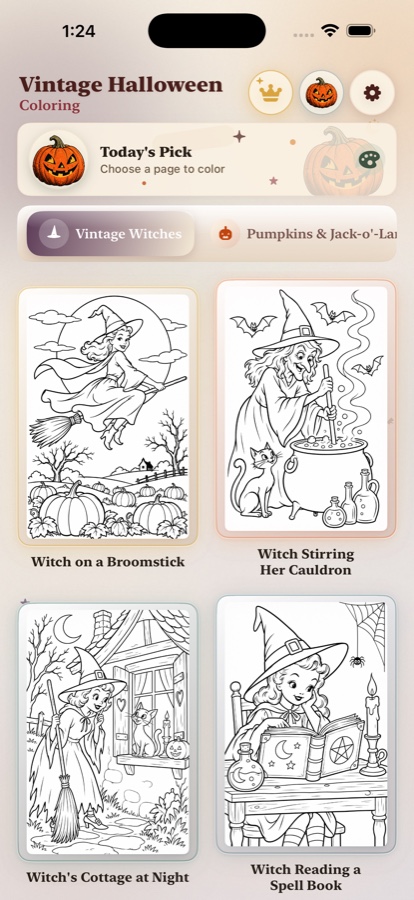
Digital coloring is useful when you want to try multiple palettes, undo a choice, or carry the activity with you. Vintage Halloween Coloring is an iOS app created for adults who enjoy warm, nostalgic Halloween scenes. Read why we made the Halloween Coloring iOS app to see how the app grew from a love of the season.
Create a gentle evening around the page
The environment can support attention, but it does not have to become elaborate. Lower the brightness, make a warm drink, put the phone on silent, and keep the tools you need within reach. If sound helps, choose something predictable and quiet. If silence helps, let the page be enough.
Set a soft endpoint rather than a finish line. You might color for ten minutes, complete one section, or stop when the first cup of tea is gone. A clear endpoint makes it easier to begin because the session does not feel endless.
Our article on quiet coloring rituals for autumn evenings has more ideas for light, sound, pace, and making a creative pause repeatable.
What to do when the page feels overwhelming
There is no requirement to use every part of an illustration. Cover the page with a second sheet and reveal one area at a time. Choose only three colors. Start with the largest shape. Or switch to a simpler design.
It can also help to stop judging the image while you work. A coloring page is not a test of neatness. If the color goes outside a line, incorporate it into the next shape or leave it alone. The point of an attentive practice is noticing what happens, not eliminating every imperfection.
For more general ideas about making coloring feel restorative, read Halloween coloring for stress relief. If you prefer generous shapes and less visual strain, explore large print Halloween coloring pages.
Mindfulness prompts for a Halloween page
A prompt can give the mind a gentle place to rest. Use one at the beginning or when you need a new direction:
- Which shape on the page feels most inviting?
- Where is the warmest color going to live?
- Can you find three places where moonlight would land?
- What is the quietest part of the scene?
- Which color would this pumpkin be at dusk?
- What small detail would a cat notice first?
- Can you leave one area intentionally uncolored?
These prompts are not assignments. They are ways to return to observation when the urge to rush or perfect the page takes over.
A realistic weekly Halloween coloring practice
If you want to make mindful coloring a seasonal habit, keep it small. Choose one page on Monday, return to it for ten minutes on Wednesday, and finish or change direction on the weekend. You can also keep a folder of unfinished pages so the next session begins with an invitation rather than a blank screen.
Vary the level of detail. A simple pumpkin can be right for a busy day, while a mandala or moonlit house can hold a longer weekend session. The practice stays welcoming when it adapts to your energy instead of asking your energy to adapt to it.
For a wider range of moods and subjects, visit the Halloween coloring pages for teens and adults guide or browse the full Vintage Halloween Coloring journal.
Frequently asked questions
What are Halloween mindfulness coloring pages?
They are Halloween-themed coloring pages chosen and used for a slower, more attentive creative session. Common subjects include mandalas, pumpkins, leaves, cats, moons, candles, and repeating patterns.
Which Halloween coloring pages are best for mindfulness?
Choose a design that feels inviting rather than overwhelming: repeated patterns, clear sections, calm landscapes, pumpkins, leaves, black cats, moonlit scenes, or medium-detail illustrations with room to pause.
Can Halloween coloring help with anxiety?
Coloring can offer a quiet creative pause and help some people focus on a simple present-moment activity, but it is not a medical treatment or replacement for professional mental-health support.
Should I use printable or digital Halloween coloring pages?
Printable pages work well for tactile, screen-free sessions, while digital coloring is useful when you want undo, flexible palettes, and a portable activity. Choose the format that makes it easiest to begin.