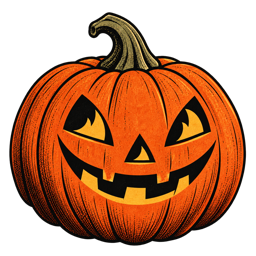
Halloween coloring pages are often introduced as a quiet seasonal activity, but they can also offer meaningful opportunities for young children to practice how their hands and eyes work together. Holding a crayon, moving toward a boundary, changing direction, choosing a color, and turning a page all create small moments of coordination.
Halloween coloring pages for fine motor skills work best when the activity stays playful. The goal is not to demand perfect coloring or to turn a pumpkin into a test. It is to offer a motivating picture, a comfortable tool, and enough time for a child to explore movement and control.
This article is educational rather than medical advice. Children develop at different rates, and a printable page cannot assess development or replace individualized support. If a caregiver or professional has concerns about motor skills, speak with a qualified pediatrician, occupational therapist, or teacher. At home or in class, coloring can simply be one friendly activity among many.
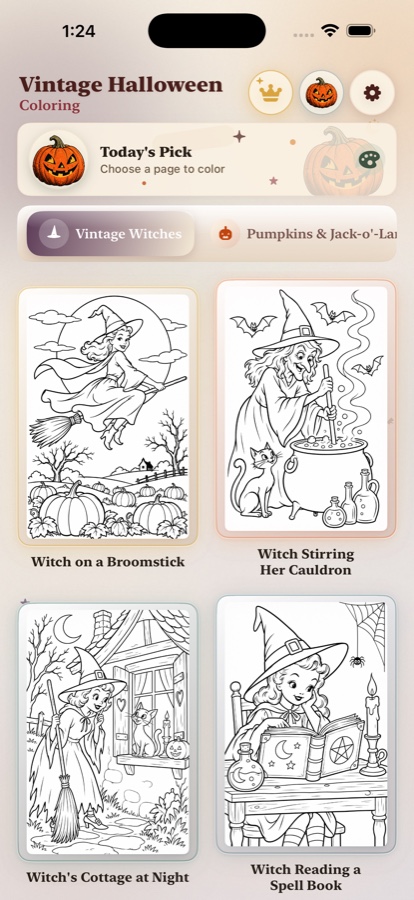
How coloring supports fine motor practice
Coloring involves more than filling a shape. A child needs to stabilize the paper, hold a tool, decide where to move, and adjust pressure as the tool travels. The exact movement varies with age, tool, posture, and experience, so it is more useful to observe the process than to focus only on the finished picture.
- Grasp: holding a crayon, pencil, marker, or dot tool in a comfortable way.
- Pressure: learning that a tool can make a light or dark mark.
- Direction: moving across a shape, around a curve, or along a short line.
- Visual boundaries: noticing where a pumpkin, ghost, or leaf begins and ends.
- Coordination: matching what the eyes see with what the hand does.
- Endurance: staying with a small task for as long as it remains enjoyable.
These are observations, not promises. A child does not need to stay inside every line for coloring to be worthwhile. A bold, energetic page can show just as much engagement as a neat one.
Choose the right Halloween page
Begin with the picture rather than the supposed age level. The best page is one that the child recognizes and wants to touch.
Large shapes for first coloring experiences
A large pumpkin, friendly ghost, simple bat, witch hat, or round candy shape gives the hand plenty of room to move. Thick outlines are easier to see, and the page can be completed in a short session.
Medium-detail scenes for growing control
When a child is ready for more choice, add a cat beside a pumpkin, a witch with a broom, or a small house with a moon. These images include several areas without requiring precision in every corner.
Patterns and details for older children
Older children may enjoy pumpkin ribs, spiderwebs, leaves, stars, or color-by-number sections. The page can become a longer focus activity, but it should still be possible to pause or stop without feeling unsuccessful.
For the youngest artists, see Halloween coloring pages for preschoolers and toddlers. For more structured early-learning extensions, read Halloween coloring worksheets for kindergarten and homeschool.
Five fine motor activities built around one coloring page
1. Color one large section at a time
Choose a pumpkin or ghost with a few open areas. Invite the child to pick one section, color it, and then decide what to do next. This creates a simple beginning and ending without asking the child to complete the whole page.
2. Trace before coloring
Use a finger first, then a crayon or pencil, to follow the outside of a pumpkin, cat, or witch hat. Keep the instruction light: “Can you follow the curve?” If tracing feels frustrating, skip it and return to free coloring.
3. Add dots and stickers
Dot markers, round stickers, or small pieces of tissue paper can be easier to manage than a pencil for some children. Place dots on pumpkin ribs, stars in the sky, or spots on a friendly monster. This also gives the page texture.
4. Cut and display
After coloring, let the child cut around a large pumpkin, bat, or ghost with age-appropriate scissors and supervision. The cutout can become a card, a garland piece, or a classroom display. Our guide to Halloween coloring page crafts and decorations has more ideas for finished artwork.
5. Match tools to shapes
Offer a thick crayon for large areas, a regular pencil for medium shapes, and a dot marker for small repeated marks. The child can learn that different tools suit different parts of the picture without needing a formal lesson.
Make the tools easier to use
Tool choice can change the experience more than the page itself. Chunky crayons are easier for some small hands to grip. Short pencils can reduce the feeling of handling a long, unwieldy tool. Washable markers create bold color but need a protective sheet underneath.
- Use paper that stays flat on the table.
- Add a nonslip mat or a small piece of tape to hold the page still.
- Place only a few colors within reach at first.
- Use a vertical surface or easel for children who enjoy larger arm movements.
- Keep scissors, glue, and small objects supervised and appropriate for the child.
There is no single correct grasp to demand during a relaxed coloring activity. Comfort, safe use, and willingness to participate matter more than making every child hold a tool in exactly the same way.
Halloween subjects that invite movement
Pumpkins and jack-o-lanterns
Pumpkin ribs create natural curved paths. A child can color each section a different shade, add dots to the face, or trace the stem. For an older child, use a pumpkin patch with large and small pumpkins to create a simple search game.
Continue with Halloween pumpkin and jack-o-lantern coloring pages for more age-flexible ideas.
Ghosts and bats
A ghost has broad open space and an easy silhouette. Bats introduce wings, curves, and repeated shapes. Put several bats across a page and invite the child to choose a color pattern without requiring identical results.
Black cats and witch hats
Cats offer ears, tails, whiskers, and a body that can be colored in sections. A witch hat provides triangles, bands, buckles, and stars. These details can support short tracing or sticker activities while keeping the theme friendly.
For more cat and witch scenes, read Halloween cat coloring pages.
Adapt a page without changing the fun
If a page feels too dense, enlarge it before printing or cover part of the background with a sheet of paper. If it feels too simple, add a drawing prompt, a name line, or a few shapes to find. Adaptation is not about making the page harder; it is about making the next action clear.
- For less visual load: use one subject and hide the background.
- For more support: thicken the lines or add colored examples to two sections.
- For more choice: provide two palettes and let the child select one.
- For a shorter session: mark one small area as the stopping point.
- For a longer session: add a story, counting game, or simple craft after coloring.
For a group setting, label trays “big shapes,” “classic,” and “more detail.” This allows children to choose without making the choice feel like a judgment about ability.
Use coloring in a calm corner or early-finisher station
A calm corner should not be a place where children are sent as a punishment. It can be an optional area with predictable materials, a comfortable seat, and a few friendly pages. A child might color for five minutes, then return to the group when ready.
In a classroom, keep a small basket of pages for early finishers. Add crayons, pencils, and a finished example. Avoid requiring every child to complete the page; the activity works best when it feels like an invitation.
Our guides to Halloween coloring pages for the classroom and Halloween party coloring pages include more ideas for organizing shared stations.
Connect coloring with early learning
A Halloween coloring page can lead naturally into language, counting, and observation without becoming a worksheet overload.
- Count the pumpkins, stars, leaves, or windows.
- Compare big, small, long, and short shapes.
- Find every circle or triangle on the page.
- Practice words such as stem, wing, whisker, moon, leaf, and hat.
- Tell a one-sentence story about the character.
- Choose a repeating color pattern for a border.
For more structured number and tracing ideas, visit Halloween color by number coloring pages and our kindergarten worksheet guide.
Printing and reusable setup
Use a high-resolution PDF or image and choose US Letter or A4 according to your printer. Regular paper works for crayons and pencils. Cardstock is useful for cutouts, cards, and decorations. If you want a reusable page, place it in a sheet protector or laminate it and use dry-erase markers.
Print a test first so the lines are dark enough and the page is not cropped. Our printable PDF guide covers margins, scale, and paper choices in more detail.
How to talk about progress
Comment on the process rather than the result. “You moved slowly around that curve,” “You chose three colors,” or “You came back to the page after a break” gives children language for what they did. Avoid turning staying inside the lines into the only sign of success.
Some children will fill every space. Others will make a single bold mark and move on. Both responses can be part of exploring a material. If the child is tired or frustrated, stop, change the tool, or choose another activity.
A simple 15-minute Halloween activity
- Choose a friendly page with one clear subject.
- Put out three colors and one comfortable tool.
- Invite the child to touch or name the picture before coloring.
- Color one section together, then let the child choose the next.
- Add one optional extension: a sticker, a traced line, a cutout, or a sentence.
- Display the work or put it in a folder for another day.
The activity is complete when the child has had a meaningful moment with the page. It does not need to become a finished masterpiece.
Frequently asked questions
How do Halloween coloring pages support fine motor practice?
Coloring gives children repeated opportunities to hold a crayon or pencil, control pressure, follow visual boundaries, and coordinate what they see with how their hand moves. The activity is playful rather than a formal assessment.
What Halloween coloring pages are best for preschool fine motor skills?
Choose friendly pictures with bold outlines, large open areas, and one clear subject such as a pumpkin, ghost, bat, cat, or witch hat. Add simple tracing or cutting extensions when appropriate.
Can coloring pages be used in occupational therapy or support settings?
They may be used as a familiar, motivating activity when selected and adapted by a qualified professional. Coloring pages are not a substitute for individualized occupational therapy or developmental advice.
How can I adapt a Halloween coloring page for different abilities?
Enlarge the image, use thicker outlines, offer larger tools, stabilize the paper, reduce the number of choices, or let the child use stickers and dot markers instead of filling every section.