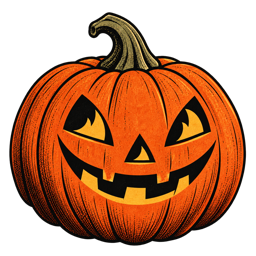
Halloween coloring worksheets can turn a seasonal theme into a useful kindergarten learning moment. A page with pumpkins, ghosts, bats, cats, or witch hats gives children something familiar to notice while they practice counting, tracing, recognizing colors, following directions, and making controlled marks. The activity still feels like Halloween, but it can support real early-learning goals without becoming heavy or complicated.
The best worksheets do not ask children to do everything at once. One page might invite them to count pumpkins and color the correct number. Another might trace the letter H, follow a dotted line, or color a friendly scene after talking about the objects inside it. A short, focused task helps children understand what to do and gives them a satisfying finish.
What makes a good kindergarten Halloween worksheet?
Kindergarten children are learning through movement, repetition, conversation, and visual clues. A worksheet should leave enough space for a child to work comfortably and enough structure to make the task understandable without a long explanation.
Look for:
- Friendly, recognizable images: pumpkins, ghosts, cats, bats, candy, leaves, and hats are easy to name and discuss.
- Clear outlines: strong line art supports coloring, tracing, and visual separation.
- One main direction: count, trace, match, color, or draw rather than a crowded page of unrelated tasks.
- Large working areas: children need room for crayons, pencils, and developing hand control.
- Black-and-white printability: the sheet should work on an ordinary classroom or home printer.
Our Halloween coloring pages collection can provide the art side of a worksheet. Add a short prompt beside a pumpkin, cat, or haunted house to make the page fit your lesson or homeschool rhythm.
1. Count and color Halloween objects
Counting pages are a natural match for Halloween because the theme is full of repeatable objects. Children can count pumpkins, bats, stars, candy pieces, leaves, or spiders, then color the group that matches a number.
Start with a small range that feels comfortable. A kindergarten page might show one to ten pumpkins in separate groups. Ask the child to touch each object while counting so the number words stay connected to the objects. Then invite them to color the group with the correct amount.
Extend the activity without adding another worksheet. Ask which group has more, which has fewer, or whether two groups are the same. Use Halloween language naturally: “This pumpkin patch has more pumpkins than that one.”
2. Trace Halloween words and letters
Tracing can turn a coloring page into a gentle handwriting activity. Choose a few short words such as cat, bat, ghost, hat, moon, or pumpkin. The child traces the word, finds the matching picture, and colors it.
For letter practice, the letter H can connect to Halloween, hat, house, and haunted. The letter P can connect to pumpkin and purple. Keep the number of words small and make sure the letters are large enough for a developing grip.
A useful routine is to say the word, stretch the first sound, trace it, and then find the object in the picture. The worksheet becomes a bridge between sound, symbol, image, and color.
3. Follow lines and build pencil control
Before children are ready to write comfortably, they need practice guiding a tool across a page. Halloween paths can make that practice feel like a story. A bat can fly along a dotted line to the moon. A cat can follow a path to a pumpkin. A witch can trace a broom trail across the sky.
Use thick dotted or dashed lines with enough space between them. The goal is not perfect accuracy. Encourage a steady movement, then let the child color the picture when the path is complete.
For more tracing ideas, see our guide to Halloween coloring pages for preschoolers and toddlers. The same principles—large shapes, friendly subjects, and short activities—also help kindergarten learners.
4. Match colors to Halloween objects
Color recognition is more meaningful when it is connected to a picture. A page might show five pumpkins with small color dots, or ask children to color the moon yellow, the leaves orange, and the cat any color they choose.
Do not make every color rule traditional. Halloween can introduce orange and purple, but it can also invite creative decisions. Ask children to find something that could be orange, then let them choose whether the cat is black, blue, gray, or rainbow-colored.
For a slightly harder task, use a simple color key. Give each color a symbol rather than a complex number system. A circle might mean orange, a star might mean yellow, and a triangle might mean purple. This keeps the activity accessible while encouraging visual matching.
5. Add a “find and color” challenge
A find-and-color page combines observation with coloring. Ask children to find three stars, two pumpkins, one cat, or all the bats. They can circle the objects first, then color them. The activity is especially useful when children enjoy searching a scene before committing to a color.
Start with objects that are easy to see. As the child becomes more confident, use a fuller picture with objects at different sizes. A pumpkin patch or haunted house scene can support a longer conversation about foreground, background, near, far, inside, and outside.
6. Use Halloween coloring for vocabulary
Seasonal vocabulary is easier to remember when children can point to and color the thing they are naming. Introduce words such as pumpkin, lantern, costume, broom, moon, leaf, candy, ghost, bat, and cottage.
Choose three to five words per session. Say each word and invite the child to find it on the page. Ask a simple question: “What is the cat doing?” or “Where is the moon?” If the child answers with one word, accept it. If they want to tell a story, follow their lead.
For a writing extension, let the child dictate one sentence about the picture. An adult can write the sentence underneath, leaving a space for the child to draw a line or trace one familiar word.
7. Practice patterns with pumpkins, bats, and candy
Halloween objects make memorable pattern materials. Draw or print a row such as pumpkin, bat, pumpkin, bat, then ask what comes next. Use candy corn colors, leaves, stars, or ghosts for other patterns.
After completing the pattern, the child can color the repeated objects consistently or deliberately break the pattern and explain what changed. Keep the first examples short, then add a three-part pattern for children who are ready.
A pattern page can also become a craft. Cut out the colored objects and glue them into a paper strip to make a border for a notebook, display, or Halloween card.
8. Combine coloring with shape recognition
Halloween illustrations contain simple shapes that are easy to spot. A pumpkin can be built from ovals. A witch hat uses triangles and rectangles. A candy piece may be a circle or square. A spiderweb contains lines and angles.
Ask children to find one circle, one triangle, and one rectangle before they color. They can outline each shape in a different pencil color. This turns the picture into a visual search without removing the fun of the page.
Use familiar language rather than a formal lesson. “Can you find a round pumpkin?” is enough. If the child notices another shape, celebrate the observation.
9. Make a kindergarten-friendly color-by-number page
Color-by-number activities work well when the key stays short and the numbers are large. Use three to six colors and avoid making every tiny section dependent on a perfect match. The goal is to connect numerals with colors while still giving the child a recognizable Halloween picture at the end.
Friendly pumpkins, ghosts, witches, and haunted houses are good subjects. When the picture is complete, ask the child to describe the result. Did the page look the way they expected? Which color did they use most?
Our existing guide to Halloween color by number coloring pages goes deeper into keys, difficulty, and creative variations.
10. Plan a short homeschool activity block
A homeschool Halloween block does not need to become an entire themed unit. Choose one page, one skill, and one conversation. For example, count pumpkins, trace the word pumpkin, color the picture, and tell a short story about the pumpkin patch.
A simple 25-minute rhythm might look like this:
- Notice: spend two minutes naming the objects in the picture.
- Practice: count, trace, match, or follow a path for five to eight minutes.
- Color: let the child work independently for ten minutes.
- Share: ask for one favorite detail or one sentence about the picture.
Stop when the child is finished with the activity, even if the page is not fully colored. A short positive session is more useful than pushing for completion.
Choose gentle Halloween subjects for early learners
Not every child enjoys frightening imagery. For kindergarten, choose pumpkins, friendly ghosts, cats, bats, leaves, candy, owls, witch hats, and welcoming haunted houses. These subjects make the holiday recognizable without requiring scary details.
Preview pages before using them in a group. If a child is unsure about a ghost or spider, begin with a pumpkin or leaf. The purpose is to support curiosity, language, and creative confidence, not to prove that a child is brave.
Our guide to cute Halloween coloring pages offers more ideas for friendly expressions, cozy scenes, and gentle palettes. For the youngest children, the preschool and toddler guide focuses on even larger shapes and simpler pages.
Printing and worksheet setup
Print one test sheet before preparing a full stack. Check that the lines are dark enough, the activity text is readable, and the working areas are large enough for crayons or pencils. Use fit-to-page if your printer and paper size do not match the file.
Keep worksheets single-sided when children may use markers. Place a protective sheet underneath and store finished work in a folder. If you want to reuse a tracing or counting page, put it in a sheet protector and use a washable dry-erase marker, with adult supervision.
For more technical advice about paper, scale, and margins, read our printable PDF guide.
Use worksheets in a classroom center
Prepare a tray with three choices: a coloring page, a tracing page, and a count-and-color page. Children can choose based on their energy and confidence. This makes the center feel like an invitation rather than an assignment.
Use simple picture cards or a small word bank beside the pages. If several children are working together, let them talk about their colors and objects. A calm center can support independent practice while still creating natural language.
For a larger seasonal plan, read Halloween coloring pages for the classroom. It includes ideas for morning work, early finishers, literacy centers, and party tables.
Finish with a small creative choice
After the learning task, give children one decision that belongs entirely to them. They might add a background, choose a surprising color, draw a second pumpkin, invent a name for the ghost, or write a tiny sign for the haunted house.
This final choice matters. It reminds children that worksheets are not only about following directions. They can also be a starting point for imagination and self-expression.
Final thoughts
Halloween coloring worksheets work best when the learning and the picture support each other. Count the pumpkins. Trace the word. Find the bat. Color the moon. Then let the child add something unexpected.
A friendly seasonal page can build pencil control, number recognition, vocabulary, visual attention, and confidence in a single short session. Keep the task clear, the imagery welcoming, and the pace flexible. The magic is in making learning feel like a small October discovery.
Frequently asked questions about kindergarten Halloween worksheets
What Halloween coloring worksheets work for kindergarten?
Choose friendly pages with large shapes, clear outlines, and one simple task at a time. Counting pumpkins, tracing letters, matching objects, and coloring familiar Halloween scenes work well for kindergarten.
How can coloring support kindergarten learning?
Coloring can support pencil control, color recognition, vocabulary, visual observation, following directions, counting, and creative expression when the activity includes a short age-appropriate prompt.
Can I use Halloween worksheets for homeschool?
Yes. Homeschool families can combine coloring, tracing, counting, reading, storytelling, and simple crafts into a short Halloween-themed activity block.
Should kindergarten Halloween worksheets be scary?
Not necessarily. Friendly pumpkins, ghosts, cats, bats, leaves, witch hats, and haunted houses create a seasonal theme without overwhelming children who prefer gentle imagery.