A Halloween coloring table can bring a little seasonal warmth to a nursing home, assisted-living community, senior center, adult day program, or family visit. The activity does not need to be competitive or complicated. A few large-print pages, comfortable tools, and an invitation to choose a color can be enough to create an hour of conversation and quiet focus.
This guide explains how to use Halloween coloring pages for nursing homes and senior centers in a thoughtful group activity. It covers page selection, room setup, supply choices, a ready-to-use 45-minute plan, gentle prompts, optional display projects, and ways for caregivers to support participation without taking over. Adapt every idea to the individual and follow the person’s care plan and preferences.
Why coloring makes a good senior-center activity
Coloring has a gentle structure. There is a visible place to begin, but no single correct way to finish. A participant can color one pumpkin, select a favorite shade, or work on a detailed cottage for the whole session. This makes the activity flexible for different attention spans, energy levels, vision, dexterity, and interest in conversation.
Halloween themes can also open the door to familiar stories. Pumpkins, costumes, candy, autumn leaves, cats, porches, and lanterns may prompt memories of family gatherings, neighborhood decorations, school parties, or favorite October recipes. The prompt can remain casual: “Which color would you choose for this porch?” is often more welcoming than asking someone to recall a specific date or event.
For page-selection guidance, start with our Halloween coloring pages for seniors and caregivers article, then use the more operational plan below when you are preparing a group table.
Choose pages that feel comfortable, not childish
A senior-friendly Halloween page can be warm, classic, and visually interesting. It does not need oversized cartoon characters or a childish visual style. Vintage witches, pumpkin patches, black cats, harvest baskets, moonlit cottages, friendly ghosts, and autumn leaves can all feel mature when the drawing has clear line work and a balanced composition.
Look for pages with:
- Large open areas: participants can see progress and choose a comfortable tool.
- Bold, clean outlines: strong lines remain readable on a standard printer.
- One clear focal subject: a pumpkin, cat, cottage, lantern, or witch gives the eye a place to start.
- A few larger details: leaves, windows, fences, hats, or stars add interest without turning the page into a maze.
- A range of moods: include harvest and autumn pages alongside gently spooky designs.
Prepare more pages than you think you need, but display only a small selection at first. Too many options can make a group hesitate. Three choices on the table and a folder of extras nearby usually create a better rhythm than a large stack that must be explained.
Five themes that work well around a shared table
Pumpkins and harvest baskets
Pumpkins are familiar, seasonal, and easy to personalize. Offer traditional orange, but also include cream, green, yellow, rust, and brown. A participant who does not enjoy spooky subjects can still take part in a harvest scene. See our pumpkin and jack-o’-lantern coloring guide for simple and detailed page ideas.
Black cats and moonlit windows
Black cats provide a strong shape without requiring a frightening story. Charcoal, navy, plum, and deep green can all work as alternatives to flat black. Add a warm window or small pumpkin to create contrast. Our Halloween cat coloring guide includes palette and conversation prompts.
Witches and storybook cottages
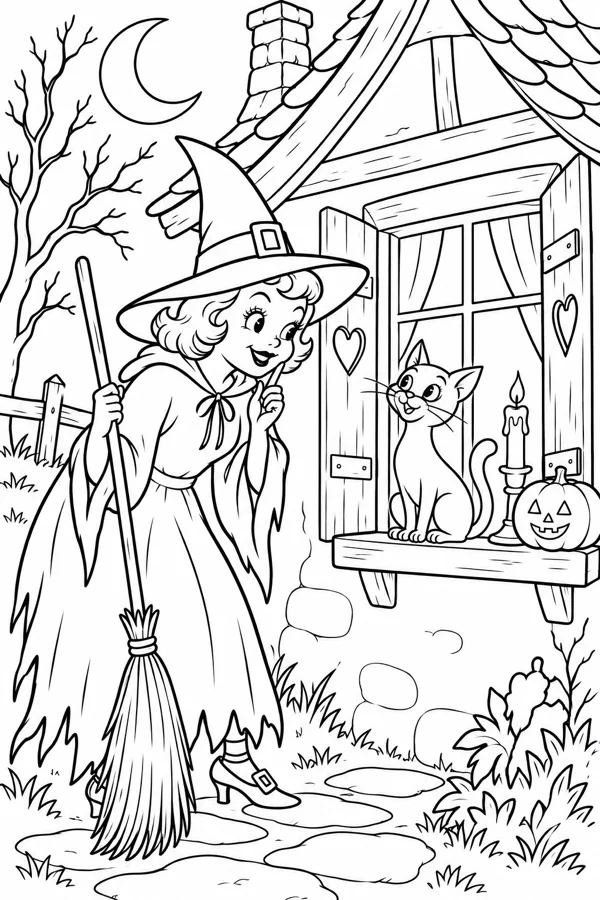
A witch page can be playful, elegant, mysterious, or cozy. A cottage scene is especially useful for a group because participants can begin in different places: roof, door, tree, fence, moon, or window. Choose artwork that feels like a storybook rather than graphic horror so the subject remains comfortable for a mixed group.
Friendly ghosts and lanterns
Ghosts are recognizable and easy to color with cream, pale blue, lavender, or soft gray. Pair a ghost with a lantern, stars, or autumn leaves. This gives participants a Halloween subject while leaving plenty of room for a gentle mood.
Autumn leaves and vintage decorations
Leaves, apples, acorns, ribbons, candles, and porch decorations can connect the activity to fall without requiring a scary theme. They also provide natural color references. Invite the group to name colors seen outside and build a shared autumn palette from those observations.
Prepare the room before participants arrive
Use even lighting and avoid placing glossy paper directly under a strong lamp. Leave space between chairs so people can move comfortably, and keep the center of the table uncluttered. Place pages in a shallow folder or stand them upright so participants can see the available subjects without lifting a heavy stack.
Put pencils, crayons, or markers in stable cups that are easy to reach. A small number of colors is often better than a full box. Start with orange, gold, cream, brown, charcoal, green, plum, and blue, then add more colors when someone asks. Keep scrap paper beneath markers and have a cloth available for ordinary spills.
Ask before adjusting someone’s paper, tool, or posture. A caregiver can offer a choice or make an item easier to reach, but the participant should remain in control of the creative decision.
Supplies for a comfortable coloring table
- Large-print pages: choose clear designs with comfortable margins and print on one side.
- Colored pencils: useful for gentle pressure, layering, and small highlights.
- Thick crayons or easy-grip markers: helpful when a broader tool feels more comfortable.
- Paper support: use a firm folder, clipboard, or non-slip mat if the table surface moves.
- Display supplies: removable tape, clips, or a string line for optional finished-page sharing.
Test the printed page before the group begins. Confirm that the lines are dark enough and that the printer has not cropped the edges. Our large-print Halloween coloring guide and printable PDF guide cover page, scale, and paper choices in more detail.
A ready-to-use 45-minute activity plan
This format can be shortened or extended. The goal is to give the session a welcoming beginning and a calm ending, not to require anyone to complete a page.
- Welcome, five minutes: show three page options and invite participants to choose one. Explain that switching pages is always fine.
- First colors, ten minutes: ask everyone to choose one favorite color and begin with any area they like.
- Shared coloring, fifteen minutes: keep conversation optional. Play familiar music only if the group enjoys it.
- One gentle prompt, ten minutes: ask about a color, a window, a cat, a decoration, or a favorite autumn detail.
- Closing, five minutes: invite participants to show one detail or place the page in a folder. Displaying work is optional.
Some participants may color for five minutes and then talk. Others may prefer to work quietly for the entire session. The activity is successful when both choices are welcome.
Conversation prompts that do not feel like a quiz
Keep prompts concrete and present-focused. They can be answered with a color, a short story, a gesture, or no answer at all.
- Which color would make this pumpkin feel warm?
- What might be behind the cottage window?
- Would this cat sit on a porch or by a fireplace?
- Which autumn color do you notice outside today?
- Would you give this ghost a lantern, a hat, or a friend?
- What small detail should we notice first?
Avoid correcting a person’s color choice or suggesting that a page needs to be finished. The conversation should support the activity, not measure memory, ability, or artistic skill.
Make participation flexible
There are many valid ways to join a coloring table. One person may color, another may choose a palette, and someone else may enjoy describing the scene. A participant might color only the large shapes while a caregiver adds no marks at all. Invite help, but do not assume it is needed.
Offer both gentle and more traditional Halloween subjects. Some people prefer pumpkins and leaves, while others enjoy witches, bats, or haunted houses. A mixed set lets participants select a mood that feels familiar and comfortable. Our Halloween coloring pages by theme guide can help you build that variety.
Digital coloring can be an additional option for a participant who prefers a screen or wants to zoom into details. The Vintage Halloween Coloring iPhone app includes undo, zoom, and palette changes. It can sit alongside paper pages without replacing the tactile group table.
Turn finished pages into a shared display
A small display can make the activity feel connected without turning it into a contest. Create a “pumpkin patch” from several pages, hang cats beneath a paper moon, or place finished autumn scenes along a hallway. Ask permission before displaying someone’s work and include blank space for anyone who would rather keep a page private.
Another simple idea is a collaborative color wall. Print one large scene across several sheets and let each participant color one section. Assemble the pages only if the group enjoys the idea; individual pages are already complete creative work.
For more group-friendly ideas, see our guides to family coloring nights and Halloween party coloring activities.
Printable pages and licensing
Before printing a set for a nursing home, senior center, or organized program, check the source’s usage terms. Personal printing and organizational copies may have different permissions. Keep the source information with the activity folder and do not redistribute files when the license does not allow it.
For your own preparation, print at actual size when the page already fits the paper. Use “fit to page” only when necessary, and test both US Letter and A4 if your facility uses different printers. Single-sided pages are easier to display and more comfortable when markers are involved.
Frequently asked questions
What Halloween coloring pages are best for a nursing home?
Choose large-print pages with bold outlines, open areas, familiar subjects, and a clear central image. Pumpkins, cats, cottages, lanterns, harvest scenes, and friendly ghosts are versatile choices. Offer witches and haunted houses as optional subjects rather than assuming one mood suits everyone.
How long should a senior-center coloring activity last?
A 30- to 45-minute session is a practical starting point, with people free to leave early or continue longer. Keep the opening short, offer one prompt, and avoid requiring participants to finish.
What supplies are easiest to use in a group?
Colored pencils, thick crayons, and easy-grip markers are common choices. Use stable cups, good lighting, single-sided paper, and a firm surface. Ask each participant which tool feels most comfortable.
Can a senior center display the finished coloring pages?
Yes, if the participant agrees. Use clips or removable tape and offer a private folder for anyone who does not want their work displayed. The display should celebrate participation, not compare results.
Make room for every pace.
Choose clear, welcoming Halloween artwork for shared tables, family visits, and quiet creative time.